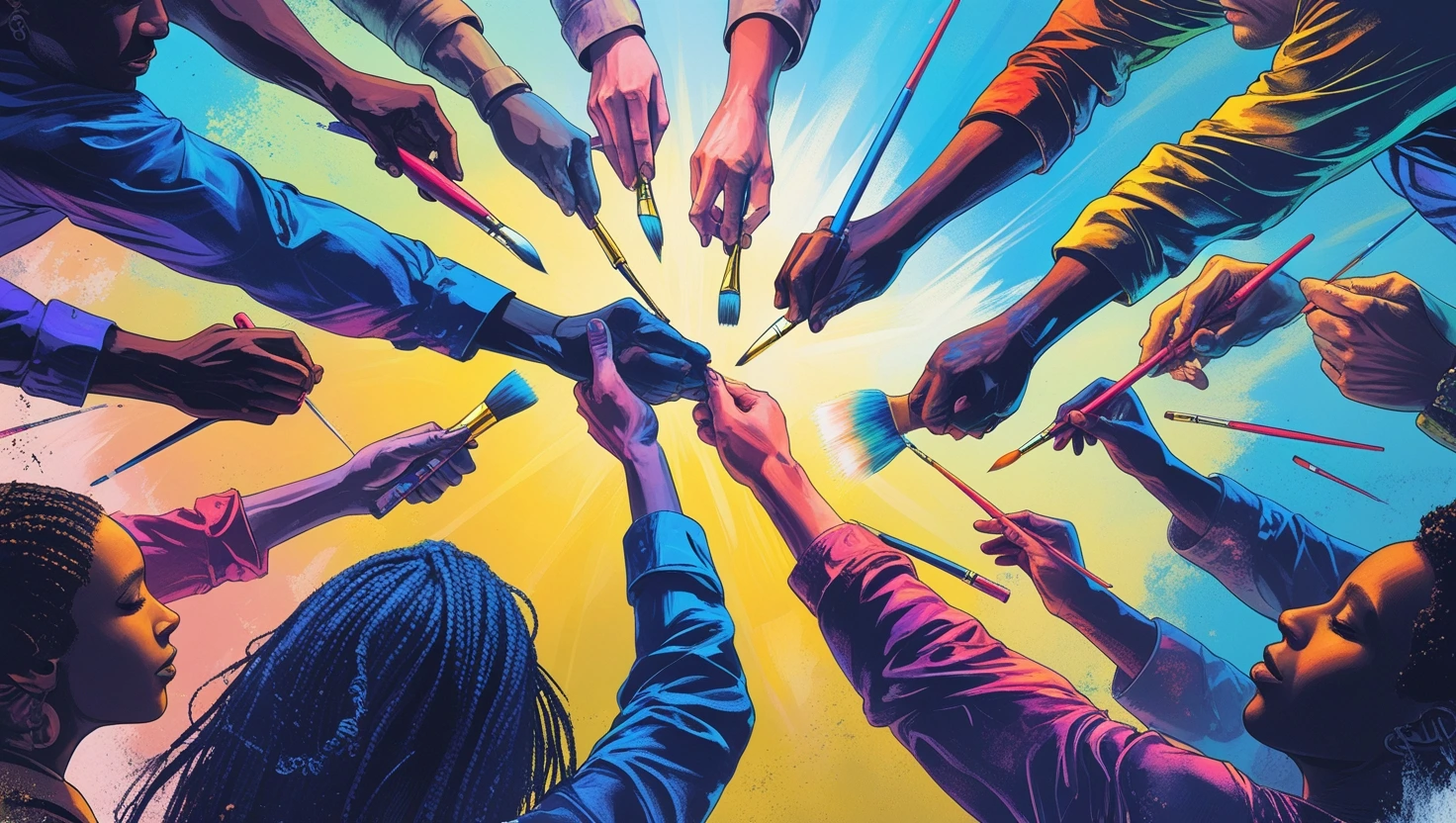
Art has always been reflection of society, capturing its hopes, struggles, and triumphs.But it is more than a mirror; it is a catalyst for transformation.Across history, creativity has been wielded as a tool to inspire revolutions, challenge norms, and bring communities together. From murals that ignite political debates to performances that confront systemic injustices, art continues to play a pivotal role in driving social change.
In this blog, we explore the powerful intersection of art and social change. And delve into how creativity becomes a purposeful force, touching hearts, shaping minds, and creating a better, more inclusive world.
Art doesn’t just communicate—it resonates. By sparking emotions, challenging perceptions, and inspiring action, it empowers individuals and communities to confront issues and imagine alternatives.
For those who lack the means to be heard, art becomes a powerful megaphone. It transforms pain,injustice, and hope into compelling visuals, sounds, and stories that demand attention.
Street art has evolved into global language of dissent and expression. Unlike traditional forms that are housed in galleries, street art speaks directly to the public, often addressing the most pressing societal issues. For example, Banksy’s works critique topics like consumerism and war,using humor and stark imagery to provoke thought.
In cities like Bogotá,Colombia, murals have become an outlet for artists to speak against violence and inequality, with entire neighborhoods transformed intooutdoor galleries of resistance.
Music is universal,transcending language barriers and cultural divides. Protest songshave historically unified movements, giving voice to collectivestruggles. During the U.S. Civil Rights Movement, songs like WeShall Overcomebecame anthems of resilience and hope.
In modern times, artists likeChildish Gambino (Thisis America) andBillie Eilish (All the Good Girls Go to Hell)address themes of racial injustice and climate change, respectively.Building Movements Through Music
Theatre immerses audiences instories that explore systemic injustices or social stigmas. Playslike The VaginaMonologueschallenge taboos around women’s rights and gender-based violence.Augusto Boal’s Theatreof the Oppressedflips the traditional spectator experience by inviting audiences tobecome participants, exploring solutions to social challenges inreal-time.
Art’s ability to evokeemotions makes it an ideal medium for addressing issues thatstatistics or academic papers often fail to convey. It simplifiescomplex problems, bridging gaps between people and inspiring action.
Art exhibitions with a focuson social themes go beyond aesthetics, serving as educational andfundraising platforms. For instance, exhibits addressing climatechange often collaborate with environmental NGOs to raise awarenessand funds.
Public installations, likeYoko Ono’s WishTree, transformpassive viewers into active participants. By inviting individuals tohang personal notes on the tree, the artwork symbolizes collectivehope and unity.
In an increasingly connectedworld, digital art has emerged as a powerful medium for advocacy.Artists leverage technology to create visually compelling narrativesthat reach audiences worldwide.
Platforms like Instagram andTwitter have turned infographics into tools for mobilization.Campaigns like BlackLives Matter usebold, shareable visuals to inform followers and inspire action.
Non-fungible tokens (NFTs)provide artists with new opportunities to raise funds for socialcauses. Artworks minted as NFTs are auctioned online, with proceedssupporting initiatives like disaster relief or education.
Virtual exhibits enable globalaudiences to engage with impactful art from their homes. Platformslike Google Arts & Culture host exhibits on topics ranging frommigration to biodiversity.
The intersection of art andsocial change demonstrates creativity’s power to inspire, educate,and transform. By addressing critical issues through innovativemediums, art transcends boundaries, amplifies marginalized voices,and fosters collective action. From traditional crafts tocutting-edge digital tools, artists worldwide prove that creativitywith purpose can shape a more just and inclusive future.
Support art-driven activism.Attend exhibits, share creative works, and champion initiatives thatuse art to drive meaningful change. Together, let’s harness thetransformative potential of creativity for a better tomorrow.